
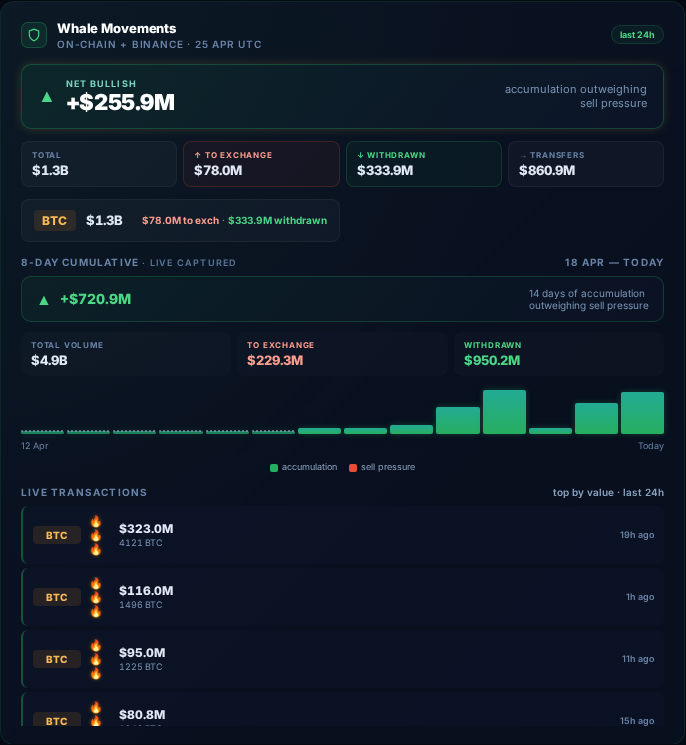
A whale alert drops. 10,000 BTC sent to Binance. Twitter lights up , some people instantly short, some people panic out, some people post "WHALE DUMPING, BE CAREFUL." Within an hour most of them have been proven wrong in different directions.
This happens because whale data is the single most overread signal in crypto. The numbers are huge, the alerts feel urgent, the headlines write themselves , and almost nobody stops to ask what the transaction actually is. Everyone's trading the size. Nobody's trading the context.
The same on-chain event can mean four different things depending on where the coins came from, where they went, and what the rest of the wallet's history looks like. Without that, the alert is basically a tweet.
The four things a big transaction might actually be
A deposit into an exchange is the one most retail traders fixate on, and it's the one most likely to be bearish in the short term. Someone moved coins onto a venue where they can be sold. Not definitive , they might be collateralising a loan or providing liquidity , but directionally, a cluster of large exchange deposits in a short window is usually distribution.
A withdrawal from an exchange generally means the opposite. Someone wants self-custody, which almost always implies a longer hold. When exchange reserves are falling steadily over weeks and whales are moving coins to cold storage, that's textbook accumulation and often the backdrop of multi-month uptrends. The key word is steadily. One whale pulling once is noise.
A wallet-to-wallet transfer between two large addresses sounds dramatic and usually isn't. These are mostly OTC settlements, custody reshuffles, or an exchange rebalancing between its own wallets. The coins didn't enter or leave the market. Worth ignoring unless the destination wallet has a known pattern.
A fresh wallet receiving a large amount and sitting on it is the one people miss. That's often new cold storage , someone just bought a lot and wants to hold it. When the pattern repeats over weeks, it tends to precede durable price appreciation. Nobody posts about it because there's no dramatic exchange deposit to screenshot, which is part of why it works.
What the data can't tell you
The on-chain record is just the on-chain record. It doesn't tell you who the whale is, whether they're a fund, an exchange treasury, an OTC desk, or a long-term holder. It doesn't tell you their cost basis or their time horizon. A 500 BTC deposit might sell this hour or over the next six months, and the alert looks identical either way.
And none of it accounts for OTC. The biggest flows in crypto happen off-exchange, negotiated directly between desks. You don't see those on-chain in any useful form, and they frequently move the market more than any public transaction.
This is the boring part that gets skipped. Whale data is one of the noisiest datasets in trading, and treating each alert as a trade is trading noise with extra steps.
The way it actually earns its keep
Whale movements aren't an entry signal. They're a context signal. Used properly, they confirm or cancel what other data is already suggesting.
Funding bullish, open interest climbing, whales quietly pulling off exchanges , that's a setup with weight behind it. Funding bullish, open interest climbing, but exchange deposits spiking and reserves rising , that's a warning. The rally has run out of supply or someone large is fading it.
Flat funding, flat price, random wallet shuffling , nothing is happening. Walk away and do something else.
The trick with whale data isn't catching every big transaction. It's using it as one ingredient in a larger picture, and ignoring the alerts that don't fit a story the rest of your data supports.
CryptoWorldNews pulls whale data from four independent sources , Blockchair, Mempool.space, Ethplorer, and Blockcypher , and feeds it directly into a per-coin Confluence Score alongside funding, open interest, exchange reserves, and news. Start a free 7-day trial, no credit card required. £14.99/month while founding spots remain, £24/month after. 14-day money-back guarantee.
Related reading
- How to track crypto whale wallets (and what the numbers actually mean). A practical walkthrough: whose wallets they are, which moves count, and how to follow them day to day.
- What "signal confluence" actually means (and why one signal is never enough). Whales are one ingredient. This is why you need the others alongside it.
- What a trade actually costs you (it's not the 0.1% on the fee page). The hidden cost of acting on every alert without the context that backs it.